Three Lessons from the Virginia Beach Shooting

Three Lessons from the Virginia Beach Shooting
DeWayne Craddock, 40, shot and killed 11 people before he was killed by police. It is not clear how police eventually entered the building to engage the shooter, or how long that took. As time passes, the lessons learned from the Virginia Beach in 2019 shooting continue to pile up. As security practitioners in one form or another, we can learn from the analysis and implications of these issues and reduce the likelihood of recurrence through self-assessment and the identification and elimination of similar vulnerabilities at our work sites.
Lesson 1: Locked Doors Delayed the Police Response
Virginia Beach Police rescue efforts were reportedly delayed because they lacked key cards to access the building, the Associated Press reported. Police were heard over the radio during the May 31 shooting begging for electronic key cards and debating various methods for opening the doors as gunfire erupted from inside the city offices, according to the report. The shooting lasted 36 minutes before police were able to stop Craddock, according to Virginia Beach Police Chief James Cervera. This is more than four times longer than the typical active shooter event, according to DHS statistics. A similar situation occurred during the Navy Yard shooting in Washington, D.C., in September 2013. Officers only entered the building after finding the entrance key card on a deceased security guard.
This is likely the easiest of the three issues to resolve, depending on where an organization is located and the size of the police department.
Option 1: Give Credentials to Local Law Enforcement
The first option would be for organizations to provide credentials or keys directly to local law enforcement to maintain in patrol cars. This option may be easier and less expensive than the alternative below, but there will have to be regular auditing to ensure accountability of credentials, no different than what would be expected for any other credentials or keys you might issue to contractors.
Option 2: Install a Police-Accessible Knox Box
The second option, which has some cost and requires a bit more coordination, is to install or upgrade an existing Knox Box. Traditionally, Knox Boxes are used to securely hold credentials and/or keys to enable the fire department to access the facility in the event of a fire. We have never seen a case where the police department has been given a key to the fire department’s box. However, the alternative model shown here accommodates a second lock that can be used by the police department to enter a facility, avoiding a situation where the police are standing at a locked door trying to figure out how to get in and engage a shooter. Seconds count here.


Lesson 2: Employees Face Real Barriers to Reporting Concerns
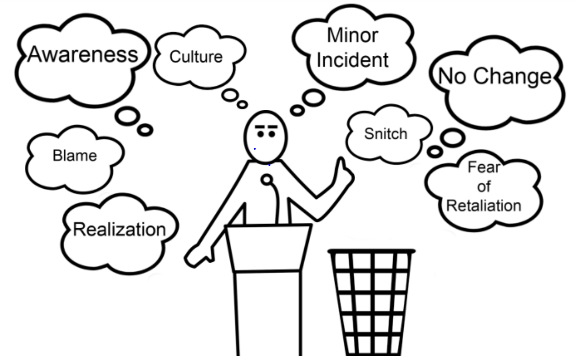
It will likely not be revealed in the City’s final report summarizing the police investigation whether one of the shooter’s coworkers had reported their concerns to anyone at the workplace. According to the family attorney of one of the victims, she had talked with her husband the night before the shooting about explicit concerns she had about the shooter. Was anyone in a responsible position at work informed about these concerns? It may never be known, and if not, this wouldn’t be the first time. Many employees are reluctant to report concerns of workplace violence for a variety of reasons, which should be openly discussed in workplace violence training to overcome natural tendencies. Imagine you were a coworker of the Virginia Beach shooter, had concerns, and remained silent.
Lesson 3: The Warning Signs Were There
A firm was hired by the city to conduct what appeared to be a parallel inquiry alongside the police department’s investigation. Some of their findings included:
What the Investigation Found
- The shooter felt that he had been treated unfairly by his employer and thought he deserved a salary increase. Grievance is a common factor in many insider threat attacks.
- In June 2017, the shooter emailed his managers and a human resource liaison stating he felt “confused and isolated.”
- The shooter was paranoid and believed others were out to get him.
- He grew increasingly isolated after he and his wife divorced in 2017.
- His work performance dipped to the point that he made many mistakes and was put on a plan to improve.
- In 2005, the shooter “surprised a burglar in his home” and bought his first handgun four months later, police said. In the years leading up to the shooting he stockpiled several more weapons and a silencer, and ordered body armor, though it had not arrived by May 31.
Red Flag Baseline + Change to Baseline Behavior + Life Changing Event = HIGH RISK, PLEASE REPORT
When the Life-Changing Event Is a Termination
Sadly, the first two conditions often exist and go unrecognized or unreported, and it is the life-changing event that is the straw that can break the camel’s back. When that life-changing event is a termination and the organization is not prepared for the worst, you can have outcomes like those in Aurora, Ill., where the shooter was summoned to a meeting room and told he was fired. He responded with a pistol, opening fire on the executives in the room, and then took his anger to the plant floor where dozens of his coworkers were still on the lines. The shooter was a convicted felon of a violent crime who reportedly had served 2.5 years in prison. After the incident, the governor of Illinois told constituents, “There is no way to prepare.” We respectfully disagree. There are many things that can be done to reduce the risk of workplace violence through training, policy and procedures, and with respect to stressful events like a termination. Actions can be taken before, during and after a hostile termination. In addition to educating employees to detect baseline red flag behaviors and changes in their coworkers, organizations have to make a commitment to identify the risk of workplace violence, acknowledge that it can happen here, and put in place the appropriate mitigation strategies recommended by security and human resource professionals, which clearly state the fundamental building blocks of an effective program.
Could the Same Gaps Exist at Your Site?
The lessons from Virginia Beach apply almost anywhere, from first-responder access to reporting culture. We assess your facility for the same vulnerabilities and show you what to fix.

Frank Pisciotta has spent 36 years in physical security consulting and crime prevention. As President and CEO of Business Protection Specialists, he has led more than 5,000 threat assessment, risk analysis, and security design projects worldwide. Frank is a Certified Security Consultant (CSC) and achieved the Certified Protection Professional (CPP) designation in 1994.