What is Industrial Security? Purpose and Significance

What is Industrial Security? Purpose and Significance
At its core, industrial security is about safeguarding the people, places, and assets that keep your organization running. It also involves putting physical measures in place to prevent theft, trespassing, violent threats, and emergencies.
Unlike cybersecurity, which protects data, this type of security focuses on the real world, the fences, gates, guards, and systems that create a safer environment for everyone on-site.
In today’s workplace, the risks are high, but the right approach makes a difference. Whether you’re managing a factory, overseeing a warehouse, or leading a plant, protecting your people and property is now a non-negotiable.
Learn more about Industrial & Manufacturing Security
Industrial Security Plan and Its Components
Effective industrial site security isn’t a single product or policy, it’s also a coordinated system of tools, training, and protocols working together to create safer environments. Here are three foundational elements found in most well-designed physical security strategies.
Access Control
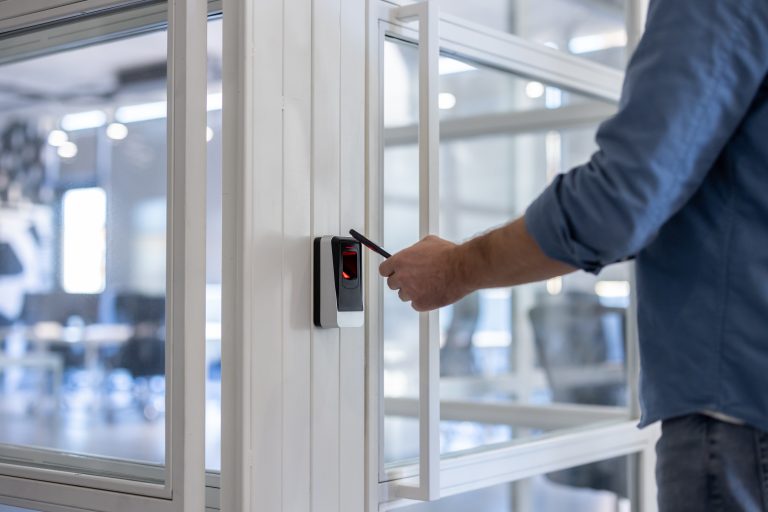
Controlling who enters specific areas of your facility is one of the most important parts of any security plan. Whether it’s an ID badge, keycard reader, or biometric scanner, access control systems help ensure that only authorized personnel can access high-risk or sensitive areas.
This approach doesn’t just reduce the risk of internal theft — it also protects employees by keeping restricted zones secure. For example, access controls help limit who can enter manufacturing floors, chemical storage rooms, or records areas in healthcare settings.
Surveillance Systems
Modern surveillance systems do far more than record video. Integrated with motion sensors, alarms, and sometimes even artificial intelligence, these systems give security teams real-time visibility and alerts when something’s out of place.
When paired with manned monitoring or onsite guards, surveillance cameras become powerful tools to deter crime, track incidents, and support emergency responses. A comprehensive security system design includes optimal camera placement, lighting considerations, and data retention protocols tailored to the facility’s unique layout and risks.
Learn more about security system design
Employee Training
Technology alone can’t keep people safe, informed staff are also essential. Employee training also ensures everyone knows their role in maintaining a secure workplace.
That means recognizing suspicious behavior, understanding emergency protocols, and knowing when and how to report potential issues. From routine safety drills to department-specific procedures, clear communication and regular practice make a measurable difference in response times and overall risk reduction.
What Are Core Pillars of an Industrial Security Plan?
Building a safer facility starts with four essential pillars. Together, they form the foundation of any successful security plan.
- Perimeter Security: This includes everything from fences and gates to bollards and signage — your first line of defense against outside threats.
- Access Control Systems: Think controlled entry points, ID checks, manned booths, and badge-based systems that ensure only the right people enter sensitive areas.
- Surveillance and Monitoring: Video cameras and trained personnel keep eyes on the ground, helping spot issues before they escalate.
- Emergency Preparedness: Lockdown drills, evacuation plans, and response training empower your team to act quickly and confidently in a crisis.
Industrial Site Security Versus Other Security Types
It’s easy to confuse the different types of industrial security, especially when digital threats are constantly in the headlines. But physical and cyber protections serve different purposes, and at BPS, we stay focused on the physical part of security.
Industrial site security means protecting your real-world assets. That’s your buildings, equipment, people, and processes. We leave firewalls and encryption to the IT folks.
Likewise, physical security differs from IT infrastructure protection. Instead of managing servers and networks, we design and implement systems that secure access points, monitor movement, and prepare for emergencies.
What Are the Types of Industrial Security
Understanding the different types of security is key to building a strong and reliable protection strategy. Each type plays a unique role in safeguarding people, property, and operations from a range of physical threats.
Physical Security
Physical security focuses on protecting the tangible elements of your operation — from buildings and equipment to materials and utilities. This includes barriers like fencing and gates, lock systems, intrusion alarms, and on-site security personnel.
These measures work together to prevent unauthorized access, deter intruders, and ensure your facility remains secure during both regular operations and emergencies.
Explore our physical security consulting solutions
Information Security (Clarification)
While many organizations prioritize data protection, it’s important to clarify that industrial security as practiced by BPS, does not include cybersecurity or digital infrastructure services. Instead, our focus remains on physical safeguards that support sensitive information that may exist outside the network (e.g., sensitive records or drawings), compliance, employee safety, and asset protection.
Personnel Security
People are at the heart of every operation — and keeping them safe is a top priority. Personnel security involves pre-employment background checks, training programs, access management, and ongoing education to ensure all team members understand how to maintain a secure environment.
Whether it’s preparing for an evacuation, identifying suspicious behavior, or handling restricted materials, trained employees help reduce human error and enhance your overall safety posture.
Risk Assessments: The First Step Toward Protection
Before you can fix a problem, you need to know where the risks lie. A physical security risk assessment is the first step in creating a plan that actually works.
These assessments aren’t one-size-fits-all. At BPS, we walk your site, ask the right questions, and identify where your vulnerabilities are, whether it’s an unmanned gate, a blind spot on your cameras, or an outdated emergency plan.
We recommend reassessments every five years to keep your strategy aligned with your current operations.
Contact us to schedule your on-site security assessment
If you’re responsible for safety at your industrial sites or facilities, the time to act is now. What is industrial site security? It’s peace of mind, knowing that your people and property are protected with purpose.
Get a free initial consultation
You are one phone call away from a zero-commitment advisory call.
Get expert guidance now.

Frank Pisciotta has spent 36 years in physical security consulting and crime prevention. As President and CEO of Business Protection Specialists, he has led more than 5,000 threat assessment, risk analysis, and security design projects worldwide. Frank is a Certified Security Consultant (CSC) and achieved the Certified Protection Professional (CPP) designation in 1994.