How BPS Enhances Physical Control and Security in Warehouses

How BPS Enhances Physical Control and Security in Warehouses
Warehouses play a vital role in supply chains, storing valuable goods and ensuring timely distribution. However, without proper physical control and security in warehouses, businesses face significant risks, including workplace violence (by drivers or employees), theft, vandalism, and unauthorized access. Inadequate warehouse security can result in substantial financial losses, operational disruptions, and even regulatory penalties.
An effective warehouse security strategy involves implementing multiple layers of protection, from access control systems to employee training. This article explores key components of warehouse security, common risks, and actionable steps to safeguard your operations. By understanding the challenges and solutions, businesses can take proactive measures to enhance security.
Why Warehouse Security Matters
Common Warehouse Security Risks
Warehouses are prime targets for criminals due to the high-value inventory they store, including products that may be stored in trailers which may or may not be secured to the building with a dock lock. Warehouses face significant risks from both external threats, such as break-ins and trailer theft, and internal threats, such as employee theft. Some of the common risks include:
- Theft: Both external and internal theft can lead to significant financial losses.
- Vandalism: Property damage can disrupt operations, increase maintenance costs, and increase the difficulty in securing a facility when unoccupied
- Unauthorized Access: Without proper access control, individuals can enter restricted areas, posing safety and security threats.

Impact of Poor Security on Operations
Poor security measures not only lead to financial losses but also disrupt daily operations. A single breach can result in downtime, loss of customer trust, and legal consequences. Effective security systems reduce these risks and ensure that warehouse operations continue without interruption.
Key Components of Physical Control and Security in Warehouses
Access Control Systems
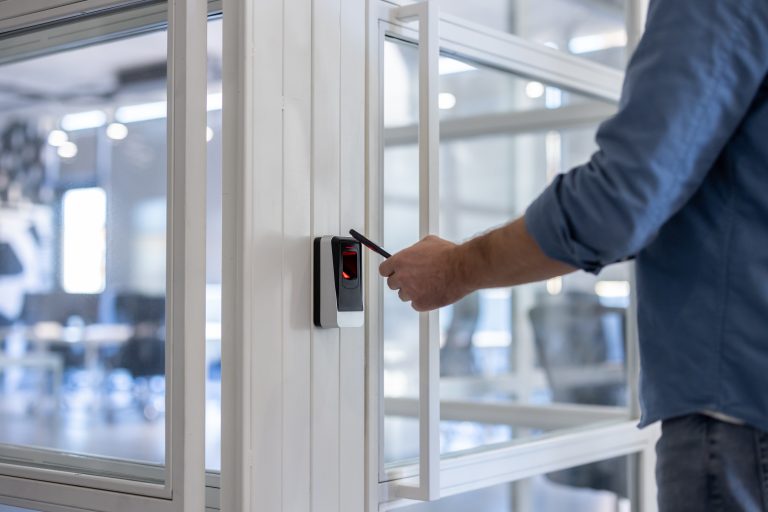
Designing effective access control measures is a crucial first step in securing a warehouse. In some cases, access control needs to start at the property perimeter and on other cases where there may be property constraints or multiple tenants in a building, the perimeter first line of defense may be the building shell. In either case, if affordable, moving beyond mechanical locks would be preferred. Enhanced access control measures might include:
- Keycard Systems: Allow authorized personnel to access specific areas.
- Biometric Systems: Provide enhanced security by using unique biological identifiers like fingerprints.
- Turnstiles: Prevent unauthorized entry and help monitor foot traffic.
- Physical Barrier for Truck Driver Reception Areas: Prevents access to employees and provides enhanced employee safety from angry or assaultive driver behavior.
BPS develops customized security strategies tailored to warehouse layouts and operational requirements, ensuring maximum effectiveness by guiding clients through the selection and design of appropriate systems.

Surveillance and Monitoring
Continuous monitoring is essential for detecting and responding to security threats in real-time. BPS advises on the integration of advanced technologies such as:
- IP Cameras: High-resolution cameras for comprehensive coverage.
- Smart Sensors: Detect motion, temperature changes, and unauthorized access.
- Perimeter Monitoring: Ensures the outer boundaries of the warehouse are secure. There are some good detection beam technologies that can be less expensive than including sensors on every door but conflicts often arise on keeping a clear pathway and not getting pallets or other items stacked in a way that blocks the beam.
Did You Know? Real-time surveillance with audio speak-back capability from a video central station helps deter potential intruders and provides evidence in case of incidents.
Perimeter Security Solutions
Protecting the perimeter of the warehouse is crucial in preventing unauthorized access. BPS designs perimeter security strategies and advises on solutions such as:
- Fences and Barriers: Serve as physical deterrents.
- Motion Detectors or Infrared Beams: Alert security teams to potential intrusions.
- Video with People or Vehicle Detection Analytics: Provides detection, assessment and can start the security or police response notifications. Video when deployed in truck movement and loading areas can also provide forensic evidence when there are safety incidents, accidents or allegations of product shortages from the customers.
By combining these measures, businesses can create multiple layers of protection.
Internal Security Measures
Internal threats, such as employee theft or mishandling of goods, are often overlooked. BPS advises the best practises for these risks through:
- Employee Screening: Ensures that only trustworthy individuals are hired.
- Internal Audits: Regular checks to identify discrepancies.
- Segregation and Control Measures for High-Value Assets: Helps isolate high-value inventory and reduces theft risk.
How BPS Enhances Security in Warehouses
Tailored Security Solutions
BPS begins by conducting a comprehensive risk assessment of the warehouse. This involves identifying vulnerabilities and designing solutions specific to the facility’s layout and operations.
Do you need a Security Risk Assessment?
Proactive Risk Mitigation
Rather than reacting to incidents, BPS focuses on preventing incidents by guiding clients in selecting advanced technologies and advising on regular updates to security protocols.
Ongoing Support and Optimization
Security needs evolve over time, and BPS ensures that its clients are always protected by offering ongoing support. This includes:
- Continuous Monitoring: Ensuring systems remain operational.
- Regular Audits: Identifying new risks.
- Updates: Keeping security measures aligned with the latest threats.
How to Implement an Effective Warehouse Security Program
Steps to Secure Your Warehouse
- Conduct a Risk Assessment: Identify potential threats and vulnerabilities.
- Implement Access Control and Surveillance Systems: Install systems that prevent unauthorized access and provide real-time monitoring.
- Train Staff on Security Protocols: Ensure employees understand their role in maintaining security.
- Regularly Audit and Update the Security Program: Keep security measures up to date to address new risks.
Employee Training and Security Awareness
Employees are the first line of defense in warehouse security. BPS offers tailored training programs that educate staff on recognizing and responding to potential threats. This not only enhances security but also creates a culture of vigilance.
Improving Warehouse Security Compliance
Understanding Security Regulations
Warehouse operators may need to comply with specific security regulations, and non-compliance can lead to penalties depending on the applicable laws and standards in their region. These may include guidelines on physical access, surveillance, and incident reporting
How BPS Ensures Compliance
BPS’s expertise in regulatory compliance ensures that clients meet all necessary requirements. From designing compliant systems to conducting regular audits, BPS helps businesses avoid fines and maintain operational integrity.
Advanced Warehouse Security Technologies
Smart Sensors and IoT Integration
By integrating IoT devices, warehouses can benefit from real-time data on security and environmental conditions. Smart sensors can detect motion, temperature changes, and unauthorized access, enhancing overall security.
AI-Driven Surveillance
Artificial Intelligence (AI) can analyze surveillance footage and detect anomalies faster than human operators. This improves response times and reduces false alarms.
Automated Access Control
Automated systems streamline the process of granting and revoking access, reducing the risk of human error.
How to Choose a Security Partner for Your Warehouse
What to Look for in a Security Consultant
When selecting a security partner, consider the following:
- Experience: Ensure the consultant has a proven track record in warehouse security.
- Tailored Solutions: Look for partners who offer customized services.
- Regulatory Knowledge: Ensure they understand relevant regulations.
- Support Services: Ongoing support is essential for long-term security.
Learn More: Building a warehouse or upgrading your security system? Learn how a company saved $300K by hiring an expert BPS to streamline costs and ensure the right solutions. Read the full story here.
Frequently Asked Questions (FAQs)
Why is physical control important in a warehouse?
Physical control ensures that only authorized personnel can access sensitive areas, reducing the risk of theft and damage.
What are the main components of a warehouse security system?
Key components include access control, surveillance, perimeter security, and internal audits.
How does BPS customize warehouse security solutions?
BPS conducts a thorough risk assessment and designs solutions specific to each warehouse’s needs.
What role does employee training play in warehouse security?
Employee training ensures that staff understand security protocols, recognize threats, and act appropriately during incidents.
Final Thoughts
Effective physical control and security in warehouses are essential to protect assets, ensure smooth operations, and maintain compliance. BPS offers tailored solutions, proactive risk mitigation, and ongoing support to help businesses achieve these goals.
Contact Us
Our independent physical security consultants are ready to help.
Ssecure your warehouse operations now.

Frank Pisciotta has spent 36 years in physical security consulting and crime prevention. As President and CEO of Business Protection Specialists, he has led more than 5,000 threat assessment, risk analysis, and security design projects worldwide. Frank is a Certified Security Consultant (CSC) and achieved the Certified Protection Professional (CPP) designation in 1994.